How to calculate your electricity bill

Direct Energy, December 9, 2025

4-minute read

How to calculate your electricity bill

Direct Energy, December 9, 2025

4-minute read

Equipped with a wide range of electronics, appliances and gadgets, today's homes can pose a challenge when it comes to monitoring energy consumption. Fortunately, learning to calculate your electricity bill might be easier than you think. With a few simple techniques, you can gain valuable insights about your energy expenditure.

In this article, we'll help you determine the energy usage of each appliance and electronic device in your home, empowering you to anticipate and manage your energy costs more effectively.

Couple bill budgeting at home on the couch

How to calculate electricity cost by appliance

To get an accurate picture of your home's energy consumption, you’ll need 3 figures to calculate the electricity usage of each appliance or electronic device: 

  • The wattage of the appliance
  • The average number of hours you use it per day
  • The price you pay per kilowatt-hour (kWh) of electricity


Your kWh rate is printed right on your electric bill, and you can estimate your average daily use. To determine the wattage of an appliance, look for a label or metal plate, which is usually in an hidden place like the back or bottom of the appliance or device.

If the wattage is listed, it will have a “W” at the end. If you can’t find a label, check the appliance’s original documentation or try searching online for its technical specs.

Once you have your data, calculate the cost of use with this formula:

  1. Multiply the device’s wattage by the number of hours the appliance is used per day
  2. Divide by 1000
  3. Multiply by your kWh rate


For example, if you have a 150-watt television that you watch 5 hours per day, it consumes 750 watt-hours per day (150 x 5 = 750). You'd then divide 750 by 1000 to convert 750 watt-hours into .75 kWh (750 ÷ 1000 = .75). If your electricity rate is 12¢ per kWh, that means it costs 9¢ per day to use your television (.75 x .12 = .09). That should account for about $2.70 of your monthly electric bill (.09 x 30 = 2.7).

It will take a lot of number crunching to do this with all the appliances, electronics, and lights in your home, so if you’re looking for an easier way, turn to technology.

Electricity bill calculation formula

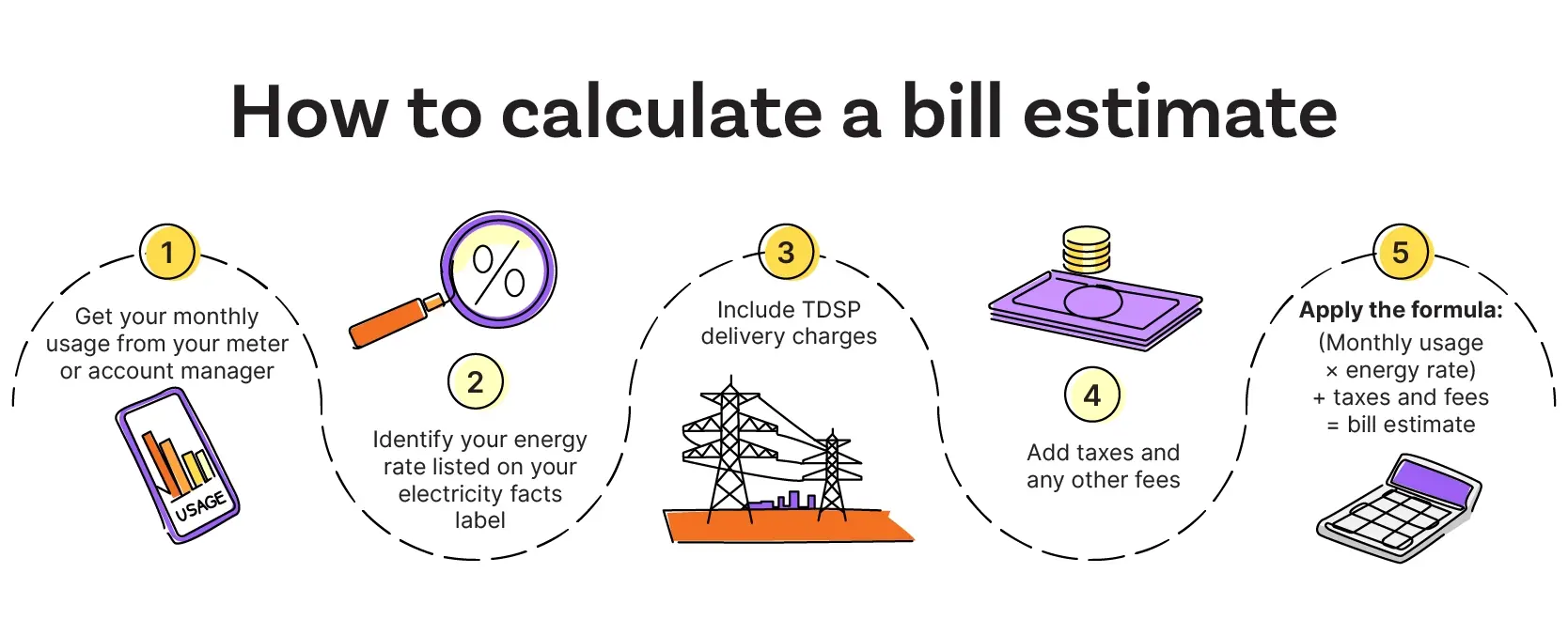
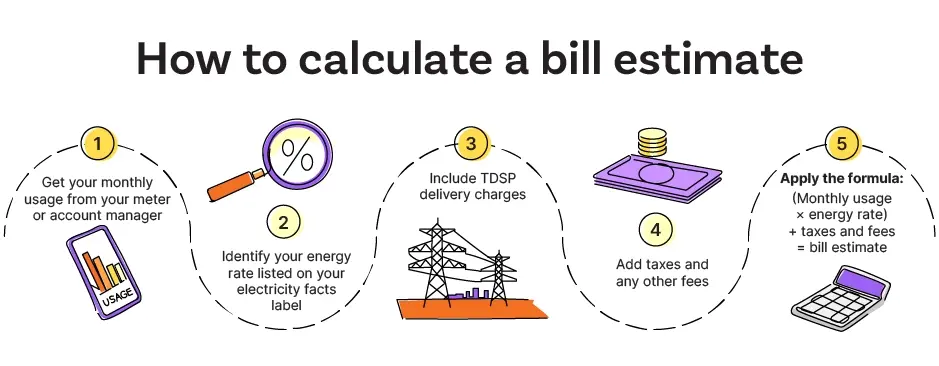
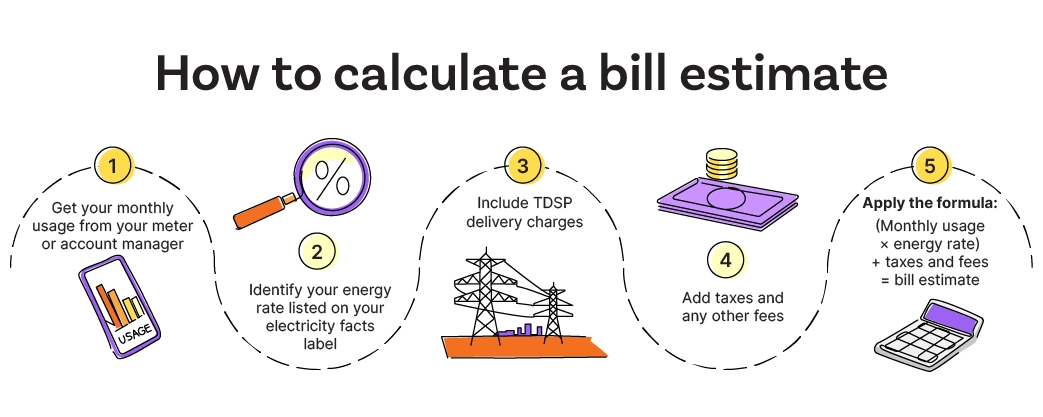
Calculating a bill estimate requires some key information on your usage and plan rate, then you just apply this simple formula:

(Monthly usage × energy rate) + taxes & fees = estimated bill

how to calculate your bill infographic

Common household appliances and their average energy consumption

To calculate your electricity costs it's essential to know how your devices and appliances use electricity. This can also be helpful when trying to reduce usage. Here's a look at the typical energy consumption of some popular electronic devices:

  • Video game systems: Your gaming console can be power-hungry. Newer models might use between 50 to over 200 watts. If you game a lot, this could add a fair amount to your annual electricity use – think 132 to over 225 kilowatt-hours (kWh) per year. 
  • Smart TVs: These modern screens usually consume 50 to 200 watts when they're on, averaging around 100 watts. Even with all their smart features, their extra power use is generally quite small. 
  • Laptops/computers: Laptops are generally efficient, typically using only 30-70 watts. Desktops, especially powerful gaming setups, will use more – anywhere from 70 to 500 watts. Knowing this can help you decide if it's time to power down. 
  • Refrigerators: Your fridge runs constantly, so it's a significant energy user. When its compressor kicks in, it can draw 300-800 watts. Over a year, a typical modern fridge can consume 400-800 kWh, making it a key area for potential savings if it's an older model. 
  • Electric ovens: Electric ovens use a lot of power, typically between 2,000-5,000 watts. Each hour of use can add 2-3 kWh to your bill, so plan your cooking wisely. 
  • Microwaves: Quick meals are convenient, but your microwave uses a good chunk of power, usually 600-1,000 watts. Even short daily uses can add up to about 73 kWh per year. 
  • Lights (LED): Switching to LED bulbs is a smart move as they're energy efficient, usually using only about 10 watts. If you leave a single LED light on for a couple of hours daily, it only adds about 7.3 kWh to your annual usage.


While these estimates can give you a general idea of how much energy your appliances consume, the actual amount will change based on their specific model, how old they are, how efficient they are and how you use them.

Tech tools for energy monitoring and kWh calculators to estimate your electricity bill

Even if you know how to calculate your electric bill with just a pen and paper, you can learn much more about your energy consumption with a technological upgrade.

Companies like Neurio, Curb and Sense have designed products that can connect to your home’s main electrical panel and recognize the unique electrical signatures of the appliances in your home. Each product works somewhat differently, but most allow you to view detailed breakdowns and analyses of energy usage using an app or web browser.

This kind of information comes at a price, however. You should expect to pay a few hundred dollars for a system like this, and some require an electrician to install it at an additional cost.

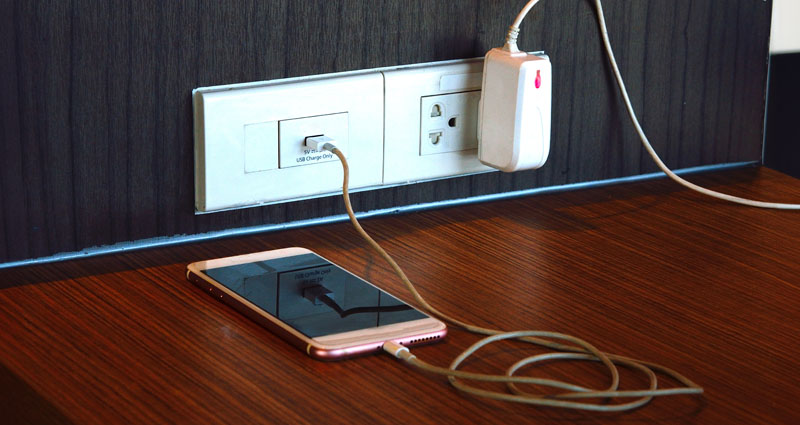
There are some less expensive tech options. One is to use smart plugs, which are outlet adapters that can be controlled from anywhere using a mobile app. Some smart plugs ⏤ but not all ⏤ feature wattage monitoring that you can use to verify the wattages of appliances throughout your home and track the energy consumption of the ones you use most often. 

An even less expensive tool is an electricity usage monitor with a built-in digital display, such as the Kill-A-Watt meter. It won’t give you a detailed analysis, but it will give you a quick read of the electrical draw of any appliance you plug into it, saving you time in your calculations. Some models can automatically calculate kWh totals by day, week, month or year.

Conduct an energy audit and explore Direct Energy programs

Not sure what to do with all this new data on your home energy use? Take a minute to enter your ZIP code at Home Energy Saver, an online energy assessment tool from the U.S. Department of Energy. You can use this tool to see average energy use estimates in your area for typical and energy-efficient homes and generate customized energy efficiency recommendations for your home.

Ready to take control of your energy costs? Gain a deeper understanding of your home's energy usage and discover personalized strategies for energy efficiency with tools and resources in your Direct Energy online account manager

By understanding how much energy your common household appliances consume, you're better equipped to identify opportunities for savings. Every watt saved contributes to a lower electricity bill and a more sustainable home.

Frequently asked questions

Show all answers

To calculate your electricity cost per unit (typically a kilowatt-hour or kWh), you generally divide your total electricity charge by the total number of kWh consumed in a given billing period. Your plan’s Electricity Facts Label will also specify a rate per kWh, which is the base cost of each unit of electricity you use.

Your electricity bill is typically calculated using the formula: (Total kWh consumed × energy rate per kWh) + delivery charges + taxes and fees = bill estimate. The energy rate is what you pay for the electricity itself, while delivery charges cover the cost of getting that electricity to your home. To learn more about your energy bill and the various bill components, check out our Understanding your bill page

To effectively reduce your electricity bill, focus on energy-efficient practices around your home. This can include regularly cleaning or replacing HVAC filters, ensuring your appliances are energy-efficient, using smart thermostats to optimize temperature, and taking advantage of natural light and ventilation whenever possible.

For quick energy-efficient fixes, try unplugging electronics when not in use to avoid "phantom power" drain, switch to energy-efficient LED lighting, adjust your thermostat setting to optimize heating and cooling, and ensure your home is sealed to prevent air leaks.

For more ideas to help reduce your energy use, check out these 25 energy-efficient tips


Explore the learning center

Explore our other categories by selecting one from the dropdown menu. 

Choose Direct Energy

Shop our plans and find the perfect electricity or natural gas plan for your home. Making the switch is easy:


  1. Enter your ZIP code to view available energy plans
  2. Compare plans to find one that matches your needs
  3. Complete the signup process in minutes

Signing up for Direct Energy is easy!

We offer a wide range of plans and even help you customize them to fit your needs! Shop our plans to find your best fit today.  

Need help placing an order?
Texas customers: Call us at 1-855-461-1926
Northeast and Midwest customers: Contact us


Questions about your current service?
Texas customers: Call us at 1-888-305-3828
Northeast and Midwest customers: Contact us