Start your energy-saving journey by making the switch and updating the light bulbs in your home. Unscrew those incandescent light bulbs and replace them with LED light bulbs. LED bulbs use less energy to emit light than incandescent ones, so by swapping out those bulbs, you'll start seeing the savings on your energy bill.
2. Use natural light when possible
Open up curtains and blinds to let natural light in during the day. The more natural light you have coming in, the less you need to keep the lights on indoors, helping you save electricity during the day.
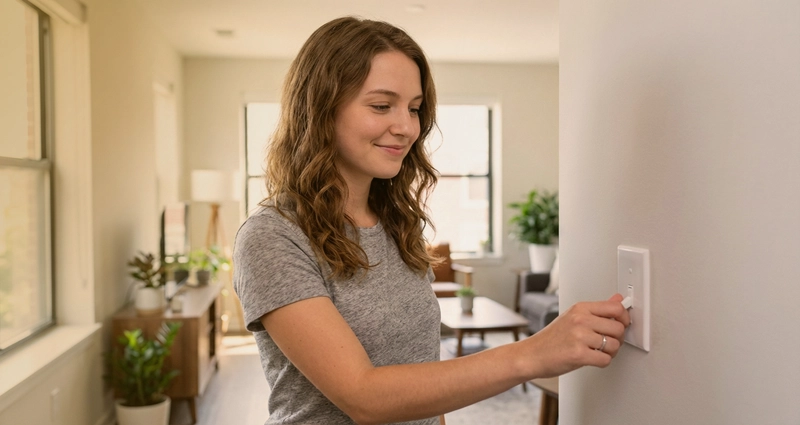
3. Turn off lights when they're not in use
Keep up with your energy-saving habits by turning off the lights after you leave the room. Lighting your home efficiently can help lower your electricity bill, even after new LED bulbs are installed.
4. Control your fixtures with a photocell or a timer
You can use timers to ensure dusk-to-dawn-only operation of your indoor and outdoor lights. We’ve all fallen asleep with the light on before, but now you can set your lamps to a night timer to easily ensure you're not wasting electricity overnight.
5. Unplug appliances to save electricity
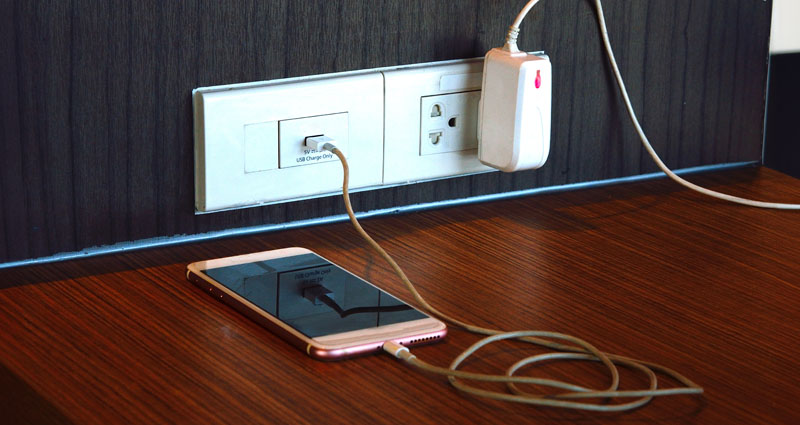
One of the simplest ways to reduce your energy usage is to be conscious of which appliances in your home are plugged in, but not in use. Devices that are plugged in can still use electricity even if the device itself is turned off — also known as phantom power or energy vampires. You can limit phantom power by plugging multiple devices into a power strip and turning it off when they’re not in use.
Working from home? Don't leave your electronics on all day long. Only turn on your computer, monitor, printer and fax machine when you need them.