








How weather affects indoor humidity and your energy bills: seasonal solutions

Direct Energy, January 27, 2026

5 minute read

How weather affects indoor humidity and your energy bills: seasonal solutions

Direct Energy, January 27, 2026

5 minute read

Woman switching on air conditioner while sitting on sofa at home

If you live in a warm climate, you likely already know that humidity can make you feel hotter. Muggy days and high humidity make your body operate less efficiently. This is because the excess moisture in the air slows the evaporation of sweat, leaving you feeling damp, uncomfortable and overheated. Shifts in weather patterns like heat waves, sudden cold fronts or even passing thunderstorms also change how much moisture the air holds, causing your indoor humidity levels to rise or fall more quickly than you might expect.

You’ve probably felt this in your own home, too. A summer rainstorm can make the air suddenly feel clammy, even though your thermostat hasn’t changed. Or in winter, indoor air feels dry and uncomfortable even though it’s cold and humid outside. These everyday experiences are the direct result of how weather and humidity interact, affecting both comfort and energy use.

If humidity can make your body feel less comfortable, just imagine what it can do to your air conditioner. When summer humidity levels rise, it can be challenging to adequately cool your home and still keep your energy efficiency in check. 

Let's take a closer look at the link between your AC system and indoor humidity levels, how you can reduce moisture levels inside your home all year long and how managing humidity improves your home's energy efficiency

Rest assured, you can stay comfortable AND save energy.

Understanding humidity and its effects on air conditioning

Before talking about your home's AC unit, it helps to understand humidity, what causes it and what it means to your indoor and outdoor comfort level. Below are some of the common terms useful to understanding humidity.

  • Water vapor: Water particles evaporated into the air
  • Relative humidity: The percentage of moisture in the air compared to the temperature
  • Absolute humidity: The actual amount of water vapor in the air
  • Specific humidity: The ratio of moisture in a mass of air compared to the dry air within that mass
     

While you may hear humidity levels expressed in different ways, all humidity is based on water vapor concentration in the air. A higher percentage always indicates a higher amount of moisture. Whatever type of humidity is being measured, if the percentage indicates high humidity, it may have an impact on your HVAC system.

Does outside humidity affect air conditioning systems?

Understanding how humidity affects your air conditioner starts with a closer look inside your AC.

How an air conditioner works

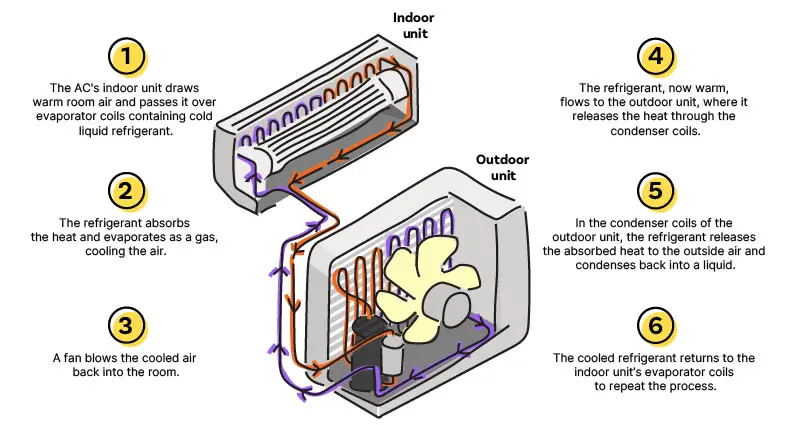
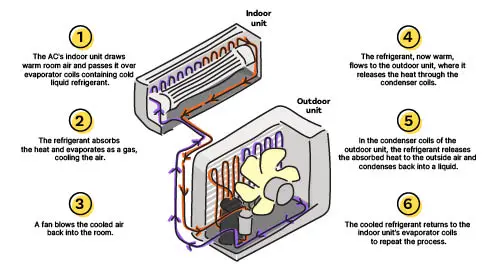
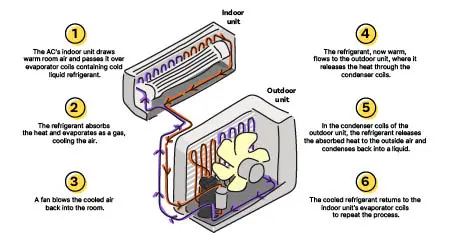
How an air conditioner works illustration

Moisture has a significant impact on your air conditioner. This is because in order to cool the air inside your home, your AC system has to remove the moisture from the outdoor air. The AC does this by passing it over evaporator coils that hold refrigerant. Once the air is cooled, your AC unit blows it into your home. The heat that is absorbed is then released outside through the condenser coils. As your AC continues running, the process begins again and again.

When the outdoor humidity is high, your air conditioner has to work harder to cool the air and remove the moisture. It also means your air conditioning system is operating less efficiently, which leaves your home feeling uncomfortably warm and clammy. Your energy bill may rise as a result. 

Running your AC during humid weather can also place more strain on it, leading to excessive wear and tear. Ultimately, if your AC has to continuously work to maintain a steady indoor temperature, this will eventually lead to a shortened lifespan. It may also cause other moisture-related problems, such as mold growth, musty odors, foggy windows and reduced indoor air quality.

Seasonal solutions: managing indoor humidity

High humidity can be problematic, but so can low humidity. Dry air can make your indoor environment feel uncomfortable, causing dry skin, respiratory irritation and increased static electricity. As with high humidity in the summer, low humidity in winter can place unnecessary strain on your HVAC system too, reducing its lifespan and increasing your expenses.

When it comes to managing your indoor humidity all year long, balance is key. To achieve that balance, consider these seasonal tips for adjusting your humidity levels:

Spring and summer strategies

When April showers begin and temperatures climb, humidity often spikes rapidly. A summer rainstorm can create extra moisture outdoors that gets into your home faster than your AC can remove it. You can keep humidity levels in check with these warm-weather strategies:

  • Consider installing a whole-home dehumidifier.
  • Keep the dehumidifier set between 40 and 50% relative humidity. Above 60% can make the air feel too sticky, but under 30% can feel too dry.
  • Conduct regular AC maintenance to ensure your system is operating efficiently.
  • Replace air filters every 1-3 months.
  • Optimize your home ventilation by using exhaust fans in kitchens and bathrooms.
  • Check regularly for signs of mold and mildew, especially in damp areas like basements.
  • Repair any leaks in the roof or around windows and doors, as leaks can lead to increased humidity.
     

Fall and winter considerations

As soon as the temperature starts to dip, you can expect to feel less humidity in your home. Additionally, dry air has a cooling effect that makes your home feel colder than the thermostat indicates. Use these cool-weather tips to adjust your humidity levels accordingly: 

  • Use a whole-home humidifier to add moisture back into the air.
  • Set your humidifier to 30-50% relative humidity, but adjust it back if the temperature warms up or you notice signs of condensation like foggy windows.
  • Add houseplants to your home to naturally increase humidity levels and improve indoor air quality.
  • Place bowls of water close to vents where warm air blows out. As the water evaporates, it will add humidity to the air.
  • Check all doors and windows and replace damaged or missing weatherstripping. Tight seals will help keep humidity in. 
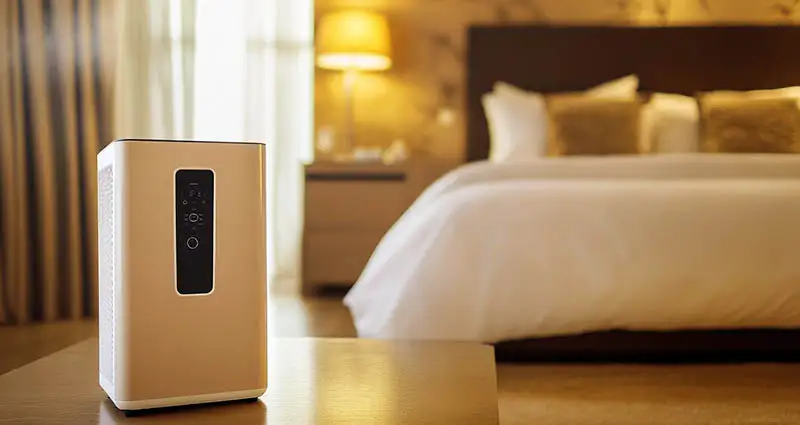
Air purifier dehumidifier in a cozy bedroom

Humidity’s impact on energy costs

Humidity control not only makes your home feel more comfortable, but it also saves homeowners money on their energy bills. The National Oceanic and Atmospheric Administration publishes a table showing changes in "felt temperature" that occur at different relative humidities. For example, 75°F air temperature at 50% RH feels like about 76°F, while 75°F air temperature at 70% RH feels like about 78–80°F. And for every degree you change your thermostat (lower in winter and higher in summer), you save approximately 4% on your electric bill. That means that a 16% adjustment in humidity would equate to a 16% savings. For medium-sized homes with an average monthly electric bill of $175, that would result in a savings of $28. In other words, by managing humidity wisely, you can stay comfortable at a higher thermostat setting in summer and a lower one in winter, and that’s where the savings come from.

Technology and automation solutions for humidity management

It can be a hassle to try to balance your home’s humidity levels and achieve a comfortable temperature in both warmer and cooler months. Smart home technology can help to make the humidification process simple and seamless. 

By incorporating the latest AI capabilities, along with machine learning and automation, humidity control technology offers numerous solutions to keep your home more comfortable and your energy costs low:

  • Integrated humidifiers and dehumidifiers: An integrated unit links to your existing heating and cooling system and works automatically to either add or remove moisture from the air using your home’s ductwork. For humidification, the unit connects to a water source and creates steam, which is then moved throughout the home. For dehumidification, the unit takes moist air from ducts and removes the humidity before circulating the dry air back into the house.
  • Humidistat: A humidistat is similar to a thermostat and is used to program and control your home’s humidification system. Smart humidistats measure the relative humidity in the air and signal either the humidifier or the dehumidifier to kick on when needed. In the newest versions, humidistats use state-of-the-art sensors to monitor both indoor and outdoor humidity levels, as well as local weather and user preferences. Smart humidistats can increase overall energy efficiency and reduce humidity issues like condensation and foggy windows.
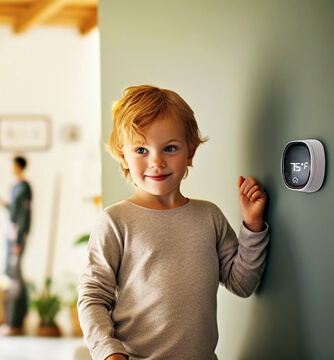
  • Smart thermostat: Smart thermostats learn from your usage, preferences and schedule to ensure your home stays comfortable when you’re in it, without wasting energy when you’re not. Some newer thermostats can also integrate with your whole-home humidity control to monitor relative humidity and kick on your humidifier and dehumidifier as needed.
     

Don’t sweat the small stuff: stay comfortable all year long

Keeping your home comfortable throughout the year involves a lot more than simply adjusting your thermostat. That’s because true comfort is impacted by much more than the temperature. It’s a combination of factors that includes humidity levels and how you manage them inside. There are plenty of ways you can increase or decrease your indoor humidity to make your home feel better and put less strain on your HVAC system. 

At Direct Energy, we work with customers to find ways to save money without sacrificing comfort. For example, our Reduce Your Use program offers electric bill credits for linking your smart thermostat to our system. We’ll make small adjustments during periods of peak use to help you improve your energy efficiency and save even more.  

Ready to take the next step?

Explore our plans today and discover how Direct Energy can help you power your home smarter.


Explore the learning center

Explore our other categories by selecting one from the dropdown menu. 

1982472_DE Category Page Large Promos_FinalImagesforDev

Download the app

Get the Direct Energy app to easily manage your account, keep an eye on your usage, refer friends and more.

Signing up for Direct Energy is easy!

We offer a wide range of plans and even help you customize them to fit your needs! Shop our plans to find your best fit today.  

Shop plans

Need help placing an order?
Texas customers: Call us at 1-855-461-1926
Northeast and Midwest customers: Contact us


Questions about your current service?
Texas customers: Call us at 1-888-305-3828
Northeast and Midwest customers: Contact us